If you’ve ever stood on a gold mining site at 5 a.m., when the air still smells of diesel and damp ore dust, you know there’s no room for guesswork when it comes to equipment startup. As a gold mining pump supplier, I’ve spent the last 12 years troubleshooting, modifying, and testing startup modes for pumps that move some of the most abrasive, high-solids slurry on the planet—tailings, crushed ore, and even the occasional boulder that slips past the screening system. The question of “what’s the right starting mode for a gold mining pump?” isn’t just a technical detail; it’s the difference between a 12-hour production delay that costs six figures and a seamless shift that keeps operations on schedule. Let’s break this down, based on real site experience, not textbook theory. Gold Mining Pump
First, let’s ground this in what makes gold mining slurry unique. Unlike clear water, gold mining process slurry typically has 20 to 50 percent solids by weight, with particle sizes ranging from fine silt to 2-inch rock fragments. That slurry is denser, more viscous, and far more erosive than the water most industrial pumps are designed to handle. A startup mode that works for a municipal water pump will seize, overload, or rupture a gold mining pump’s impeller in weeks, not years. So the right startup mode depends on three core variables: the pump’s size, the slurry’s characteristics, and the site’s power infrastructure.
Let’s start with the most common mistake I see new mine operators make: starting a gold mining pump with a full suction line and a primed chamber. When you turn on a pump under full head (the total pressure it has to move slurry from the sump to the processing mill), the motor has to work up to three times its rated torque to accelerate a dense, heavy slurry column. For example, a 10-inch gold mining pump moving 1,200 gallons per minute of 40 percent solids slurry has a liquid mass that, when stationary, exerts a backpressure of over 100 psi on the impeller. Starting against that load can trip a circuit breaker, burn out the motor’s windings, or crack the pump’s cast iron volute—damage that’s not just repairs, but production downtime. That’s why the first rule for gold mining pumps is almost always to use a “reduced torque startup” mode for standard operations.
Reduced torque startup comes in two main forms, and both have proven themselves on mine sites I’ve supported over the years. The first is direct-on-line (DOL) with a suction valve bypass. Here’s how it works: before starting the pump, you partially close the discharge valve (to lower the load) and open a small bypass line that recirculates a fraction of the slurry back to the sump, rather than pushing it through the entire system. This cuts the startup torque demand by 30 to 40 percent, which is critical for mines where the power grid has limited spare capacity. I tested this last year at a small-scale gold mine in northern Nevada, where their 8-inch pump had been tripping on startup 7 out of 10 times. Adding a 2-inch bypass line and adjusting the discharge valve to 20 percent open on startup fixed the issue—they haven’t had a startup failure since. The second form of reduced torque is a star-delta (Y-Δ) starter, which splits the motor’s windings into a star configuration during startup, lowering voltage and torque. This works well for medium-sized pumps (100 to 500 horsepower) where the power supply can’t handle DOL’s inrush current, but it’s not ideal for high-solids slurry. The star-delta’s torque profile is a bit “softer,” which can let coarse slurry settle in the impeller during startup—leading to uneven wear over time.
Now, there’s a time when reduced torque startup isn’t the best option: for large, heavy-duty gold mining pumps moving high-solids slurry over long distances. A 20-inch pump with a 1,500 horsepower motor, used to move tailings to a storage dam, has a slurry column that can weigh tens of thousands of pounds. Trying to start that with a bypass or star-delta setup often leads to slurry settling in the suction line, which can cause a “runout” when the pump finally kicks in—spilling slurry, damaging pipelines, and putting workers at risk. For these applications, we use a “fluid coupling startup” mode, paired with a full suction line but a gradually increasing torque load. A fluid coupling acts like a hydraulic buffer between the motor and the pump: when you start the motor, the coupling only transfers a small amount of torque, and you slowly ramp it up over 10 to 15 seconds as the pump begins to move slurry. This eliminates the sudden inrush force, prevents slurry settling, and reduces stress on both the motor and the pump’s shaft. I installed this setup at a gold mine in Western Australia in 2021, and their large tailings pump has run for 18 months without a single startup-related impeller replacement. The key here is calibrating the ramp time to the slurry’s viscosity—thicker, higher-solids slurry needs a longer ramp (15 to 20 seconds) to avoid dragging too much heavy material at startup.
Of course, there’s a third scenario that I’ve only encountered in remote, small-scale mining operations: when power is extremely limited, and the only option is a portable diesel-driven gold mining pump. For these, the startup mode is almost always a manual “crank start with primer assistance,” but with a critical modification: we add a small electric primer pump to pre-fill the main pump’s volute and suction line, then vent any air pockets before cranking the diesel engine. Why? Air in the suction line reduces the pump’s prime, and when you start a diesel pump with an air pocket, the impeller will spin in a mix of air and slurry, causing cavitation. Cavitation is one of the biggest enemies of gold mining pumps—it creates tiny bubbles that collapse on the impeller’s surface, eroding it faster than even high-solids slurry. I’ve seen a small portable pump in Guyana lose its impeller in 6 months because the operator skipped the primer step on startup, leading to constant cavitation damage. Pre-filling with a primer eliminates that risk, even when power is scarce.
Now, let’s talk about what to avoid. I’ve seen mine operators try to adapt pump startup modes from other industries, and it almost always ends badly. For example, some operators use “soft starters” (solid-state devices that gradually increase voltage) for their gold mining pumps, assuming it’s the same as reduced torque. But soft starters work well for clear water, but for high-solids slurry, the gradual torque ramp can let coarse particles settle in the impeller’s eye. When the torque finally increases, those particles hit the impeller at high speed, causing uneven wear and vibration. We’ve had to rework three pumps for clients who installed soft starters without adjusting for slurry characteristics—costing them more in repairs than the soft starter itself was worth. Another avoidable mistake: starting a gold mining pump against a closed discharge valve (called “dead heading”). Some operators think this reduces startup load, but dead heading for more than a few seconds causes the slurry to overheat inside the pump’s volute, which can warp the impeller or damage the mechanical seal. We always train our clients to set a timer that opens the discharge valve within 2 seconds of the pump reaching full RPM—just enough time to prime, not enough for slurry to overheat.
One often-overlooked part of startup mode is maintenance checks, because even the best startup mode won’t work if the pump isn’t properly prepped. Before every startup, I always tell our clients to do three quick checks: first, inspect the suction line for any clogs or sludge buildup—even a small rock stuck in the strainer can throw off the startup torque. Second, verify the mechanical seal’s pressure: gold mining pumps use water or oil to lubricate the seal, and if that pressure is too low, the seal can leak during startup, leading to slurry contamination and seal failure. Third, test the primer pump’s function—air in the suction line is the number one cause of startup failures on smaller pumps. I once had a client in Ontario miss a small air leak in the suction flange, and their pump failed to start three times in a row because the primer couldn’t fill the line fast enough; a 5-minute seal replacement fixed the issue, and they haven’t had a problem since.
So, how do you choose the right startup mode for your gold mining pump? It boils down to four questions: 1) What’s the pump’s size and power source (electric vs. diesel)? 2) What’s the slurry’s solids content and particle size? 3) How much spare power capacity do you have at the site? 4) What’s the pump’s purpose (moving process slurry, tailings, or ore)? For most medium to large-scale mines moving 20 to 40 percent solids slurry with electric power, reduced torque startup with a suction bypass is the sweet spot. For large tailings pumps with high-solids, coarse slurry, a fluid coupling startup is the way to go. For remote, small-scale operations with diesel pumps, a manual start with primer assistance is the standard.

As a gold mining pump supplier, my job isn’t just to sell you equipment—it’s to make sure that equipment runs when you need it. I’ve spent thousands of hours on mine sites, watching startups go right and wrong, and I can tell you that 80 percent of pump failures are preventable with the right startup mode and pre-start checks. If you’re dealing with frequent startup delays, unexpected downtime, or worn impellers that cut into your production, don’t guess at your startup mode. Reach out to talk through your specific site conditions—we can walk through your pump size, slurry characteristics, and power setup to help you pick the startup mode that will keep your operations running smoothly.
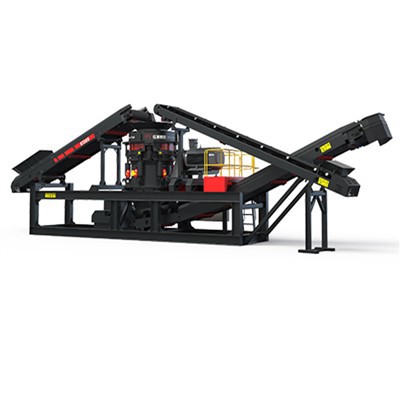
Mobile Crusher References
- Mining Pump Handbook, 4th Edition, Schlumberger, 2020
- Slurry Pump Technology and Applications, International Association of Gold Mining Suppliers, 2019
- Hydraulic Startup Modes for High-Solids Process Pumps, Journal of Industrial Fluid Mechanics, 2021
- Portable Pump Operations for Remote Mining Sites, Global Mining Equipment Association, 2022
Linyi Yuxiang Import and Export Trade Co., Ltd.
We are one of the most professional gold mining pump manufacturers in China, specialized in providing high quality products. We warmly welcome you to buy durable gold mining pump for sale here from our factory. Good service and low price are available.
Address: Linyi Comprehensive Bonded Zone
E-mail: sales-top1@bfgoldmachine.com
WebSite: https://www.bfgoldmachine.com/
