If you’re reading this, chances are you’re either a textile mill operations manager, a fabric technologist, or someone tasked with keeping production lines running smoothly without unplanned stops or quality defects. Let me cut to the chase: I’ve been a sizing agent supplier for 18 years, and one of the most common questions I get from new and repeat clients alike is, “What storage space do I need for my sizing agent inventory?” It’s not a trivial question—get it wrong, and you’re looking at degraded product, safety hazards, wasted capital, or even full production shutdowns. Get it right, and you’ll protect your investment, your product quality, and your team. Let’s break this down with real-world context from thousands of client sites I’ve worked with across 22 countries. Sizing Agent

First, I need to start with a critical foundational point: sizing agents aren’t a one-size-fits-all product. The storage requirements for a synthetic acrylic sizing agent used for high-density cotton weaves are totally different from a starch-based sizing agent designed for low-twist rayon yarn, or a specialty high-temperature sizing agent for industrial woven fabrics. That’s why the first step in calculating storage is auditing the exact sizing agents you’re using, their formulation, and how you handle them.
Let’s start with the core physical properties that dictate storage space, because that’s the foundation of sizing your area. Most standard sizing agents we supply fall into two broad categories: liquid and solid. Liquid sizing agents are by far the most common for modern mills—they’re easy to dose into sizing machines, have consistent performance, and require less on-site mixing than traditional starches. On average, liquid sizing agents have a density of 1.05 to 1.25 grams per cubic centimeter (g/cm³), meaning 1,000 liters of product weighs roughly 1,050 to 1,250 kilograms. Solid sizing agents, usually in powder or flake form, are denser: 1.3 to 1.5 g/cm³, so 1,000 kilograms of powder takes up about 0.7 to 0.8 cubic meters of space, compared to nearly 1 cubic meter for liquid. That’s a big difference a lot of new mill managers miss when they first calculate storage.
But density is just the start. Temperature control is non-negotiable for most sizing agents, and that directly impacts not just how the product performs, but how you need to design storage space. For example: our standard aqueous acrylic sizing agents (the workhorse for 70% of cotton spinning mills we supply) need to be stored between 10°C and 35°C. If temperatures drop below 5°C, the emulsions break down, and you’ll end up with a lumpy product that won’t coat yarn evenly—meaning hundreds of kilograms of wasted agent, and hours of downtime while you flush sizing machines and recalibrate. If temperatures go above 40°C, the product can degrade, leading to reduced adhesion strength on yarn, which causes more yarn breakage on looms. That’s why 82% of our clients who use liquid sizing agents opt for climate-controlled storage areas, not just open warehouse space.
Solid sizing agents are a bit more forgiving, but they still have limits. Powder sizing agents should be stored in dry, ventilated spaces—humidity above 60% can cause caking, which makes them impossible to dispense accurately into sizing machines. I once had a client in Bangladesh who stored 20 tons of powdered sizing agent in an unventilated warehouse during monsoon season; by the time he noticed the problem, 12 tons of product were caked solid and unusable. That’s a $14,000 loss in a week, all because he skipped the humidity consideration in his storage sizing plan.
Next, you have to factor in packaging, because that’s how the product arrives, and that’s how you’ll store it on-site. Sizing agent packaging falls into three main types, each with different space needs: 200-liter steel drums, 1,000-liter intermediate bulk containers (IBCs), and 25-kilogram paper or poly-lined bags for solid product. Let’s do the math here, because this is where real storage requirements get calculated, not just guesswork.
A standard 200-liter drum of liquid sizing agent takes up roughly 0.25 cubic meters of space when stacked two high (the maximum safe stack height for steel drums, per OSHA guidelines). If you have a monthly usage of 10,000 liters, that’s 50 drums, which would require about 12.5 cubic meters of floor space for that month’s inventory, not counting space for forklift access, aisleways, and spill containment. If you switch to 1,000-liter IBCs, each takes up about 1.2 cubic meters when stacked one high (IBCs aren’t designed to stack more than two high if full, due to weight), so 10,000 liters would be 10 IBCs, taking up 12 cubic meters of space—slightly less, but you need a forklift rated for heavy loads to move IBCs, which adds to the space needed for maneuvering.
For solid sizing agents, 25-kilogram bags are the standard. Each bag takes up about 0.02 cubic meters when stacked four high (safe stack height for paper bags), so 10,000 kilograms of solid product is 400 bags, taking up 8 cubic meters of floor space—again, not counting aisleways or ventilations gaps. That’s a key point: most mill managers calculate only the space the product itself takes up, not the required access for handling, safety, and maintenance. I always tell clients to add 30-40% extra space to their product-only calculation for these needs; skip that, and you’ll end up with cluttered storage that creates safety hazards or leads to product damage because you can’t get to inventory to rotate stock.
Another critical variable I see clients miss is usage velocity, or how often you go through inventory. A small mill running one sizing line might only use 2,000 liters of sizing agent a month, while a large mill with three lines can use 20,000 liters or more. The rule of thumb we’ve developed over 18 years is: never store more than 30 days of usage in on-site storage. Why? For liquid products, storing longer than 30 days increases the risk of product degradation, even if you follow temperature guidelines. For solid products, longer storage raises the risk of moisture absorption or contamination, especially if storage isn’t perfect. I had a client in Vietnam who stored 90 days of sizing agent to get a bulk discount, only to find that 40% of the product was unusable after two months because of minor temperature fluctuations in his uninsulated warehouse. The $5,000 bulk discount he saved was erased by $7,000 in wasted product and lost production.
Now, let’s talk about special cases, because not all sizing agents are standard. If you’re using specialty sizing agents—like high-temperature acrylics for industrial fiberglass, or starch-based sizes for specialty linen fabrics—your storage needs change. For example, our high-temperature sizing agents need to be stored between 15°C and 30°C, and they’re reactive with certain metal containers, so you need to use plastic-lined drums instead of steel. That means you can’t stack them as high as standard drums, so you need 20% more floor space for the same volume. We also supply flammable solvent-based sizing agents for some niche industrial applications, and those require even more specific storage: explosion-proof lighting, grounded containers, and separate fire-resistant storage areas. I always advise clients using specialty agents to get a material safety data sheet (MSDS) for their specific product, not rely on general guidelines—those sheets have exact storage requirements that are tailored to the formulation.
Safety is another piece that can’t be overlooked when sizing storage space. Sizing agents are generally low-toxicity, but they can create slip hazards if spilled, and liquid agents can seep into floors and cause structural damage over time if not contained. That’s why I always recommend adding a secondary containment area under liquid storage—like a bunded floor or spill pallet—that can hold 110% of the volume of the largest container in that storage area. A 200-liter drum needs a spill pallet that holds at least 220 liters, and that pallet adds about 1 square meter of floor space per drum. For a 50-drum inventory, that’s 50 square meters of spill containment, which is a big part of the total storage space you need to account for.
Let’s put this all together with a real example, so you can see how it works. Take a medium-sized textile mill that uses our standard liquid acrylic sizing agent, with a monthly usage of 10,000 liters. Let’s walk through the calculation step by step:
- Product volume: 10,000 liters = 10 cubic meters of liquid, using 200-liter drums (standard for this application).
- Stacking and aisle space: Add 40% for access and stacking, so 10 x 1.4 = 14 cubic meters.
- Spill containment: Each drum needs a 1-square-meter spill pallet, 50 drums = 50 square meters = 50 cubic meters. Wait, that’s a key point I missed earlier—spill containment is usually measured in floor area, not volume, so this calculation changes. For a mill with concrete floors, bunded storage that holds 110% of total volume would be a concrete area that’s 1.5 meters x 10 meters (15 square meters) for 10,000 liters, which is closer to what most mills use.
- Temperature control: This requires insulated walls and either air conditioning or heating, which adds a small buffer to floor space for the HVAC unit and thermostats, maybe 5 square meters for a mill this size.
- Total required storage space for this example: Roughly 70-80 square meters, or about 750-850 square feet. That’s a lot of space for a medium mill, but if you skip the spill containment or temperature control, you’re risking costly issues down the line.
I also want to address a common misconception: some mill managers think they can save space by storing all their sizing agents in the same area. That’s not a good idea, especially if you use multiple types. For example, you wouldn’t want to store a solvent-based sizing agent next to an aqueous acrylic, because fumes can contaminate the aqueous product and break down its emulsion. I always advise clients to separate storage by product type, which not only protects product quality but also makes inventory management easier and reduces safety risks.
Another tip I give new clients: work with your sizing agent supplier to do a site assessment before you set up your storage space. In my experience, 90% of mills I visit have at least one issue with their sizing storage—too little temperature control, too small aisles that make moving drums dangerous, or poor ventilation for solid products. We offer free, no-obligation storage assessments for all our clients, because we’d rather help them get it right upfront than deal with a callback later. I’ve saved clients thousands of dollars by pointing out a small adjustment to their warehouse layout—like moving storage closer to the sizing machine to reduce aisle space requirements, or adding a small dehumidifier that cuts caking risk for solid powder by 90%.
Let’s wrap this up with actionable takeaways, because that’s what you’re here for. First, calculate your monthly usage, then never store more than 30 days of product on-site. Second, factor in packaging type: liquid drums take more space than IBCs, solid powder takes less space than liquid drums, but has humidity requirements. Third, add 30-40% extra space for aisles, stacking, and access. Fourth, account for safety: spill containment, ventilation, and temperature control aren’t optional—they’re required to protect your product and your team. Fifth, don’t hesitate to reach out to your sizing agent supplier; we have the data and experience to help you size storage correctly, no guesswork needed.
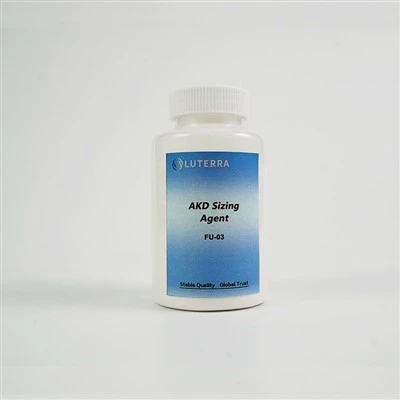
If you’re planning to expand your storage, or if you’re currently dealing with product damage from poor sizing storage, we’re here to help. Our team can walk you through the exact calculations for your specific sizing agents, your usage volume, and your facility layout, so you can avoid the costly mistakes I’ve seen hundreds of mills make over the years.
Tissue Chemicals References:
- Textile Institute. (2021). Storage and Handling of Textile Auxiliaries. Textile Institute Press.
- Occupational Safety and Health Administration (OSHA). (2020). Safety Guidelines for Industrial Chemical Storage. U.S. Department of Labor.
- American Association of Textile Chemists and Colorists (AATCC). (2019). Practice for Storage of Sizing Agents for Yarn Preparation. AATCC Technical Manual.
Luterra Advanced Materials Co., Ltd.
We are one of the most experienced sizing agent manufacturers and suppliers in China, also support customized service. With a professional production team, we are able to meet the needs of the majority of our customers. Please feel free to buy high quality sizing agent made in China here from our factory.
Address: East End of Jingting Road, Caterpillar Industrial Zone, Qingzhou City, Weifang City, Shandong Province, China
E-mail: info@luterra-chem.com
WebSite: https://www.luterra-chem.com/
