If you’ve ever worked in medical sterilization, pharmaceutical production, or any industry requiring sensitive equipment or materials that can’t withstand high heat, you’ve likely encountered ethylene oxide (EtO) gas. As someone who’s been in the EtO supply business for over a decade, I’ve fielded hundreds of questions from clients—some technical, some practical, and more than a few that touch on how this seemingly stable sterilant interacts with oxygen. It’s a topic that’s critical for everyone from sterilization managers to process engineers, because getting that reaction wrong can mean everything from failed sterilization runs to safety hazards. EtO Gas
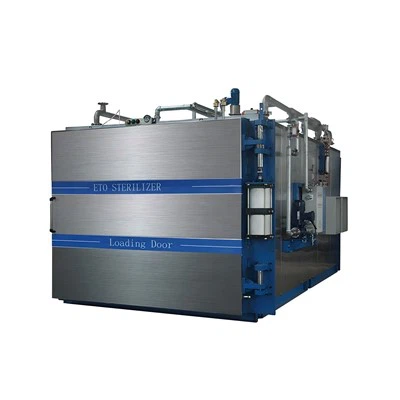
Let’s start with the basics: EtO is a colorless, flammable gas with a faint sweet odor, used primarily to sterilize heat-sensitive items like syringes, surgical tools, packaged electronics, and even some pharmaceuticals. Its effectiveness comes from its ability to disrupt microbial DNA and RNA, rendering microorganisms unable to replicate. But for all its utility, EtO isn’t inert when exposed to oxygen—far from it.
At its core, the reaction between EtO and oxygen is a combustion reaction, but it’s not the same as the rapid burn of a match or a gasoline fire. The behavior depends heavily on conditions like temperature, pressure, concentration of both gases, and the presence of any catalysts or impurities. Let’s break this down step by step. First, pure EtO gas stored in sealed containers (which is how we supply it to our clients) remains stable because it’s isolated from excess oxygen. The moment EtO is released into an open or partially oxygenated space, however, it begins to interact. Under standard atmospheric conditions (room temperature, 1 atm), the reaction is slow and barely noticeable—almost imperceptible. But raise the temperature, and things shift quickly. That’s because combustion reactions rely on activation energy to get started; for EtO, that energy threshold is around 420°C (788°F) for a mixture of EtO and air.
Wait, let’s clarify that mixture part. EtO is flammable in air at concentrations between 3% and 100% (by volume)—that’s an extremely wide flammable range, which is why handling EtO safely requires strict protocols. When EtO and oxygen are within that range, and the activation energy is met (like from a spark, hot surface, or even a static discharge), the reaction proceeds rapidly. The products of complete combustion are carbon dioxide, water vapor, and heat—simple molecules, but the heat released is what makes this reaction so dangerous. A complete combustion reaction for EtO looks like this: 2C2H4O + 5O2 → 4CO2 + 4H2O + Heat. That’s a balanced equation, and it’s accurate for fully oxidized EtO. But in real-world sterilization scenarios, complete combustion is rare. Most of the time, EtO is in a controlled environment (a sterilization chamber) with a limited amount of oxygen, or at lower temperatures. That leads to incomplete combustion, which can produce harmful byproducts like formaldehyde, carbon monoxide, and even small amounts of residual EtO—all of which are problematic for both safety and regulatory compliance.
As an EtO supplier, this is why we don’t just ship gas canisters to clients; we provide guidance on how to handle the gas when it’s mixed with oxygen. For example, sterilization chambers are designed to remove most of the air (and thus most of the oxygen) before EtO is introduced. That’s a key step—by displacing oxygen with an inert gas like nitrogen, we lower the risk of unintended combustion while the sterilization cycle runs. It’s also why we emphasize storing EtO in cool, well-ventilated areas away from heat sources or open flames. I’ve seen too many clients skip the oxygen-displacement step in their chambers, only to have a small, unexpected burn during a cycle—ruining product batches and endangering staff.
Another point that often comes up: what happens when EtO is exposed to oxygen at room temperature, not at combustion temperatures? A lot of people assume it will break down, but that’s not the case. At temperatures below 100°C (212°F), the reaction between EtO and oxygen is negligible. It doesn’t oxidize spontaneously or produce harmful byproducts on its own—until the conditions change. That’s why proper storage is so important: keep EtO canisters sealed, away from direct sunlight, and at temperatures below 30°C (86°F), and the gas will remain stable for years. But expose it to a hot surface (say, a faulty electrical component in a storage area) and suddenly you’re dealing with a different situation.
We also get questions about what happens if EtO leaks and mixes with ambient oxygen. That’s where the flammable range becomes critical. Air is about 21% oxygen, so if a leak releases EtO at a concentration between 3% and 80%, the mixture is explosive. That’s a big part of our safety training for clients: we teach them to monitor for EtO leaks with gas detectors, because even a small spark from a light switch can ignite the mixture. In fact, many industrial safety codes classify EtO as a Class I, Division 1 hazardous material because of this wide flammable range when mixed with air (oxygen).
Let’s talk about catalysts too, because that’s a factor people often overlook. Some materials, like iron oxide or certain metal alloys, can act as catalysts that lower the activation energy for the EtO-oxygen reaction. That means the reaction can start at much lower temperatures—sometimes as low as 150°C (302°F) instead of 420°F. So even a hot metal surface that’s not hot enough to ignite gasoline could trigger combustion of EtO mixed with oxygen. We always advise clients to inspect their sterilization chambers and storage areas for corroded metal parts or any other potential catalysts that could speed up the reaction.
Now, what does this mean for our clients who rely on EtO for sterilization? It’s not just about safety—it’s about performance. If the EtO-oxygen reaction isn’t controlled, two things can happen: either the gas burns up before it can sterilize the load, leaving microbial contaminants, or byproducts from incomplete combustion remain on the sterilized items, which can be toxic (especially for medical devices that come into contact with the human body). That’s why our supply service includes more than just gas; we work with clients to calibrate their sterilization cycles, adjust oxygen levels in their chambers, and test for residual EtO and byproducts after each run. We’ve had clients come to us after struggling with inconsistent sterilization results, and more often than not, the issue was that their chambers weren’t properly evacuating oxygen before introducing EtO. By modifying that step, they cut their residual byproduct levels by 90% and reduced their cycle time by 15%.
I also want to address a common misconception: some people think that because EtO is used for sterilization, it’s safe to mix with oxygen. That couldn’t be further from the truth. The same properties that make EtO effective at killing microbes (its ability to react with cellular components) are what make it reactive with oxygen. When EtO comes into contact with microbial cells, it reacts with proteins and DNA, but when it reacts with oxygen, it’s a combustion reaction. Those are two entirely different processes, and it’s crucial not to mix them up.
Over the years, we’ve also seen advances in how EtO is supplied and used to minimize the EtO-oxygen reaction. For example, many of our clients now use EtO blends with carbon dioxide, which displaces even more oxygen and lowers the flammable risk. We offer both pure EtO and custom blends, depending on a client’s specific needs. For small-scale users, like dental clinics, we provide pre-mixed canisters with CO2, so they don’t have to handle pure EtO and risk mixing it with oxygen incorrectly. For large pharmaceutical manufacturers, we work with them to design closed-loop systems that recycle EtO after sterilization, reducing both waste and the chance of exposure to oxygen.
Safety is at the heart of every conversation we have with clients about EtO and oxygen. Last year, we had a client that had a near-miss when a seal on their chamber failed, allowing oxygen to seep in during an EtO cycle. The gas detector alerted staff before anything ignited, but it was a wake-up call. We worked with them to upgrade their evacuation system and add real-time oxygen monitors, and now they haven’t had a safety incident related to gas mixing since. That’s the kind of value we strive to provide as a supplier: not just product, but expertise to help clients avoid mistakes that can have serious consequences.

So, to wrap this up for anyone new to the topic: EtO gas reacts with oxygen in a combustion reaction, but the outcome depends entirely on conditions. At low temperatures and with limited oxygen, it’s stable. At high temperatures, with sufficient oxygen, and an ignition source, it burns rapidly—producing carbon dioxide, water, and heat, along with harmful byproducts if incomplete. For our clients, the key is controlling that reaction: evacuating oxygen from chambers, storing EtO properly, using gas detectors, and choosing the right supply blend for their process.
EtO Gas If you’re working with EtO—whether you’re setting up a new sterilization line, troubleshooting inconsistent cycles, or just looking to ensure your staff are handling the gas safely—we’re here to help. We don’t just supply EtO gas; we provide the knowledge and support to make sure your operations are safe, compliant, and efficient. Reach out to our team to discuss your needs, and we’ll work with you to find the right solution for your facility.
References
- U.S. Environmental Protection Agency. (2021). Ethylene Oxide (EtO) Safety and Health Guidelines.
- Occupational Safety and Health Administration (OSHA). (2019). Hazard Communication Standard: Ethylene Oxide.
- European Committee for Standardization (CEN). (2020). EN 1422: Sterilization of Health Care Products – Ethylene Oxide – Requirements for Sterilization Process, Validation and Routine Control.
- National Fire Protection Association (NFPA). (2022). NFPA 58: Liquefied Petroleum Gases Code.
- International Organization for Standardization (ISO). (2018). ISO 11135: Sterilization of Medical Devices – Ethylene Oxide.
Hangzhou Riches Engineering Co., Ltd.
Hangzhou Riches Engineering Co., Ltd. is one of the most professional eto gas manufacturers and suppliers in China, specialized in providing high quality custom service and ODM service. We warmly welcome you to buy high-grade eto gas for sale here from our factory.
Address: No. 368, Wenjiao Road, Fuyang District, Hangzhou
E-mail: jason@riches-company.com
WebSite: https://www.eto-sterile.com/
