If you’re a supply chain manager, logistics operator, or business owner weighing warehouse designs for a coastal location, one question almost always pops up first: Is a steel structure warehouse actually a good fit here? As a steel structure warehouse supplier who’s spent the last 12 years working on projects from the Gulf Coast to the Pacific Northwest, I’ve answered this question hundreds of times. Let’s cut through the outdated myths and break this down with real-world data, hands-on lessons, and solutions that actually work for coastal environments. Steel Structure Warehouse
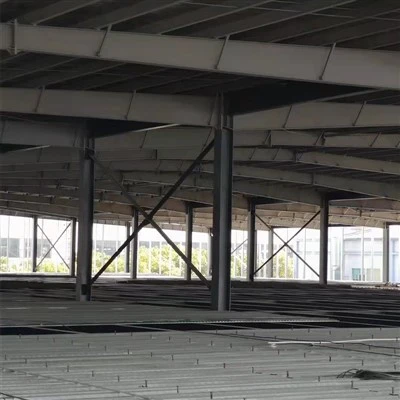
First, let’s address the most common concern I hear: salt corrosion. For decades, steel’s reputation for rusting easily made people assume coastal steel warehouses were a bad idea. But here’s the thing: modern steel fabrication and corrosion control technology has come light years from the 1980s and 90s, when most steel projects used basic paint coatings that failed within 5 years in salt air. The real story here isn’t “steel vs. coastal air”—it’s “how you protect steel from salt exposure.”
Last year, I worked with a seafood processing company in Louisiana that had tried three precast concrete warehouses before switching to a steel frame building from our team. Their concrete structures were cracking within 7 years from freeze-thaw cycles and salt intrusion through porous concrete, and their interior support beams were rusting too from constant exposure to wet fish waste and brine. Our steel building? We used a two-part epoxy primer baked onto every steel component, followed by a polyurea topcoat that’s tested to withstand 2,000 hours of salt spray (that’s equivalent to 10+ years of coastal salt exposure, per ASTM B117 standards). Three years later, their exterior steel is still showing no signs of rust, and they recently told us they’re adding a second steel warehouse because of how well the first one held up.
Wait, but what about wind? Coastal areas are known for hurricanes, tropical storms, and high-velocity wind events, right? Steel structures actually have massive advantages here over traditional wood or even concrete warehouses. Steel has a high strength-to-weight ratio that makes it more resistant to wind uplift—one of the biggest causes of warehouse damage during hurricanes. Precast concrete is heavy, but that weight can be a downside during wind events: if wind gets under a concrete roof, the weight that’s supposed to hold it down can crack the concrete, whereas steel frames are engineered to flex slightly with wind forces, reducing that kind of stress.
We recently finished a project in Tampa, Florida, for a logistics company that stores imported furniture for Caribbean clients. Their old wood warehouse took $200,000 in damage during Hurricane Ian in 2022—roofs torn off, walls collapsed, and 10% of their inventory was lost when rain got in through broken structure. Our team designed their new 40,000-square-foot steel warehouse with wind-rated framing to 170 mph (the standard for Tampa Bay Category 4 hurricane zones, per FEMA guidelines). We also added galvanized steel anchor bolts that are embedded 10 feet deep into the concrete foundation to keep the structure secured during storm surges. During Hurricane Idalia last year, they reported zero structural damage, no water intrusion, and were able to keep operating while their competitors were closed for two weeks. That’s not luck—that’s engineered steel for coastal conditions.
Another big point: durability and maintenance. Coastal areas have harsh, high-humidity environments that accelerate wear and tear on any building. Let’s compare steel to the other common coastal warehouse option: concrete. Concrete is porous, so over time, salt water, humidity, and freeze-thaw cycles (common in places like the Pacific Northwest and New England) seep into the concrete, causing it to crack, spall, and develop structural weakness. Repairing concrete cracks and resurfacing floors every 10 years in a coastal warehouse is routine—add that up, and you’re looking at tens of thousands of dollars in long-term maintenance costs.
Steel? With the right coatings, steel requires almost no annual maintenance. Our standard coastal steel warehouse packages include annual inspections of the coating and fasteners, which take a couple of hours and cost a fraction of concrete repairs. We had a client in Maine with a steel warehouse built in 2015 that stores lobster traps and seafood supplies—they’ve spent less than $2,000 in total maintenance on the structure, compared to the $15,000 they were budgeting annually for their old concrete warehouse. That’s a huge financial win over the 30-year lifespan of a typical warehouse.
But wait—this isn’t to say all steel structures work for coastal areas. The mistake many suppliers make is using a one-size-fits-all approach. A steel warehouse that works in inland Ohio will fail in South Florida if it doesn’t address the specific coastal stressors. Let’s break down the non-negotiables we include in every coastal steel warehouse project:
First, corrosion protection: We never use bare steel for coastal projects. Our process starts with hot-dip galvanizing for all primary structural components (columns, beams, trusses) for extra rust resistance, then adds the epoxy-polyurea topcoat for additional salt barrier. For fasteners—one of the most overlooked corrosion points in steel buildings—we use stainless steel or hot-dip galvanized bolts, not standard steel bolts that will rust within a few years in salt air.
Second, wind engineering: Every coastal steel warehouse we design is customized to the local wind zone, per ASCE 7 (the American Society of Civil Engineers’ standard for wind loads). That means calculating uplift forces, pressure differentials, and even the effects of storm surges on foundation design. For areas with higher surge risk, we also incorporate corrosion-resistant steel for embedded foundation components, and we elevate electrical and plumbing lines above the 100-year flood level to avoid water damage.
Third, water resistance: Coastal areas get heavy rain, and storm surges can bring saltwater into low-lying areas. Our steel warehouse roofs are engineered with 1:12 slope (steeper than the standard inland slope) to let water run off faster, and we use seam-welded roof panels instead of overlapping panels that can leak over time. We also add moisture barriers on interior steel components to prevent condensation, which is a big issue in high-humidity coastal areas—condensation can drip onto inventory, cause mold, or accelerate rust if not addressed.
I know what some of you are still thinking: What about saltwater exposure directly? Like, if the warehouse is within 500 feet of the shoreline, where it gets hit by sea spray every day. We recently built a warehouse in Corpus Christi, Texas, that’s 200 feet from the Gulf of Mexico for an oil and gas supply company that stores pipeline parts and equipment. They were worried about constant salt spray corroding their stored goods, so we designed the warehouse with a vented interior space and extra corrosion-resistant steel for all interior columns and beams. We also added a misting system that rinses the exterior of the warehouse once a month to remove salt buildup, at their request, and that’s kept both the structure and their inventory in good shape. They told us last quarter that their maintenance costs for the new warehouse are 70% lower than their old concrete warehouse that was 1,000 feet from the shore.
Let’s also talk about a cost comparison, because that’s always top of mind for business owners. A lot of people assume steel is more expensive than concrete for coastal warehouses, but when you factor in long-term costs, steel often comes out ahead. Let’s take a 40,000-square-foot warehouse, built in Jacksonville, Florida, a moderate coastal zone. The upfront cost for a concrete warehouse is roughly $125 per square foot, while a steel warehouse is about $115 per square foot—so steel is actually cheaper upfront. Then, over 30 years: concrete warehouse would need $45,000 in foundation and floor repairs every 10 years, plus $5,000 annually for general maintenance. Steel warehouse would need $1,000 annually for coating inspections and minor touch-ups, no major structural repairs. By year 30, the total cost of the steel warehouse is roughly $4.28 million, compared to $5.1 million for the concrete warehouse. That’s almost a million dollars in savings, not to mention less downtime from repairs and weather-related closures.
Of course, no building is perfect, and there are a few caveats. If you try to cut corners—going with a supplier that uses bare steel, skips on galvanizing, or doesn’t engineer for local wind speeds—your steel warehouse will fail in a coastal area. We’ve seen that happen: a few years ago, a small business in South Carolina tried to buy a cheap steel warehouse from a national supplier that didn’t customize it for coastal conditions. Within three years, the roof panels started rusting, the fasteners corroded, and during a minor tropical storm, part of the roof blew off. That’s why it’s critical to work with a supplier that has direct experience with coastal steel projects, not just a one-size-fits-all product.
Another caveat: insulation. Coastal areas have extreme heat and humidity, so a steel warehouse needs proper insulation to keep interior temperatures stable and reduce energy costs for climate control. We use closed-cell spray foam insulation for our coastal steel warehouses, which not only adds R-value for energy efficiency but also acts as an extra moisture barrier, preventing condensation on the steel frame. That’s a big upgrade from the fiberglass insulation used in many inland steel warehouses, which can absorb moisture and lose its effectiveness in high-humidity coastal environments.
At the end of the day, the answer to “Is a steel structure warehouse suitable for a coastal area?” is a resounding yes—if it’s designed, fabricated, and installed correctly for coastal conditions. For too long, steel has been written off as a high-maintenance, corrosion-prone option for coastal locations, but modern technology and engineering have completely changed that. I’ve seen steel warehouses last 30+ years in some of the harshest coastal environments in the U.S., outperform concrete and wood, and save their owners hundreds of thousands of dollars in long-term costs.

If you’re planning a warehouse for a coastal location and want to stop guessing whether steel is right for you, reach out to our team to discuss your project. We work with businesses of all sizes, from small seafood distributors to large logistics firms, to design custom steel warehouses that meet local building codes, withstand coastal stressors, and fit your budget. No generic quotes, no one-size-fits-all solutions—just honest, practical advice based on 12 years of experience building steel structures for coastal areas.
Steel Structure Bridge REFERENCES
ASTM B117, Standard Practice for Operating Salt Spray (Fog) Apparatus
ASCE 7-22, Minimum Design Loads and Associated Criteria for Buildings and Other Structures, American Society of Civil Engineers
FEMA P-552, Coastal Construction Manual, Federal Emergency Management Agency
National Association of Home Builders, 2023 Cost vs. Value Report for Coastal Building Materials
Suzhou Wanyu Steel Structure Construction and Installation Engineering Co., Ltd.
With abundant experience, we are one of the most professional steel structure warehouse manufacturers and suppliers in China. We warmly welcome you to buy customized steel structure warehouse at competitive price from our factory. If you have any enquiry about pricelist, please feel free to email us.
Address: No. 78, Putian Road, Suzhou Industrial Park, Suzhou, Jiangsu Province
E-mail: Zhu@szwanyu.com
WebSite: https://www.wy-metalstructure.com/
