Hey everyone, if you’ve ever built a custom rig—whether it’s a workshop tool, industrial controller, or even a rugged audio unit for a job site—chances are you’ve dealt with dust. That annoying, fine particulate that seeps into every crack, gunking up moving parts, clogging vents, and turning a perfectly good piece of hardware into a paperweight. As a custom hardware supplier, I get this question all the time: “Can you actually make my custom gear dust-proof, or am I just wasting my money?” The short answer is yes, but it’s not as simple as slapping a sticker on the box and calling it a day. Let’s break this down like we’re chatting over a coffee, no stuffy jargon, and no overpromising. Custom Hardware

First, let’s set the record straight: there’s no such thing as “totally dust-proof” in the way a particle accelerator is, but for 99% of custom hardware use cases, we can get it dust-tight enough to outlast whatever job you throw at it. I’ve seen this firsthand—last year, a customer came to us with custom control panels for underground mining trucks. Those rigs run in tunnels where dust is so fine it sticks to your skin like talcum powder, and if their controls seize up mid-route, that’s hours of downtime, no joke. We didn’t just seal the panels; we worked through every tiny part, and the result? A system that’s still running without a dust-related issue 18 months later. So it’s doable, but it depends on two big things: your use case, and how we build it from the ground up.
Let’s start with what dust actually does to hardware. It’s not just “yucky”—fine particles act like abrasive sand when parts move, scratch circuit boards, clog fans that keep chips cool, and even get into bearings, making them wear out twice as fast. For custom gear, which is usually made for a specific niche, we can target the exact dust risks, not a one-size-fits-all seal. Like, if your hardware lives in a wood shop where dust is mostly sawdust and fine wood fibers, that’s different from a construction site where there’s concrete dust (sharp, rigid, bad) or a farm where you’re dealing with crop dust (powdery, but gets everywhere, even through fabric gaps). We map that dust profile first, because a seal that works for wood dust might let concrete particles slip through.
Now, how do we make it work? Let’s walk through the steps we actually take for a custom order, no corporate fluff here. First, enclosure design. A lot of off-the-shelf hardware uses vented cases to cool, but vents are the #1 dust entry point. For custom gear, we can do two things here: either use sealed, conduction cooling (meaning we move heat through metal walls instead of air) or if vents are non-negotiable, we add filtered vents with mesh that’s tiny enough to block the dust you’re dealing with. Wait, but not just any mesh—concrete dust is like 10 microns, so we need a mesh with gaps smaller than that, but not so small it blocks air flow. I’ve messed this up once early on: a customer had a farm controller, and I used a mesh that was too tight, so the fan overheated and burned out. Oops, lesson learned—test the mesh before you finalize anything.
Then, seals. This is the make-or-break part. We don’t use generic rubber gaskets; we custom-cut seals that fit every gap between panels, connectors, and any moving parts (like if your hardware has a button or a switch that needs to move). For moving parts, especially ones that get touched a lot (like industrial toggle switches), we use what’s called a “Wiper Seal”—it’s a thin, flexible ring that wipes every bit of dust off the part as it moves, so nothing gets trapped inside. For static gaps, like between a metal enclosure and a circuit board mount, we use a closed-cell foam gasket that compresses just right—too tight, and it distorts the circuit board; too loose, and dust slips through. We test these seals with a dust chamber, basically a box where we blow controlled amounts of test dust (like ISO 12103-1 dust, which is the industry standard for testing) at 100 PSI, then take it apart to check for particles. If even a single speck gets through, we go back and adjust the seal.
Wait, what about connectors? That’s another big weak spot. Most off-the-shelf connectors are made for easy plug-and-play, but they have gaps where dust can get in. For custom hardware, we can use sealed connectors—like the ones used in outdoor cameras or boat electronics, but tailored to your cable size. We also use what’s called a connector boot: a flexible rubber cover that stretches over the cable where it enters the enclosure, so there’s no gap between the boot, the cable, and the enclosure wall. Last quarter, a customer making custom drone ground stations came to us with this exact issue—their connectors were letting in construction site dust, so we swapped their standard connectors for sealed ones, and added the boots, and they told us later that even after a month of flying at job sites, their connectors were still spotless.
Now, let’s talk about the limits, because I don’t want to promise something I can’t deliver. If your hardware is going to be submerged in dust, like in a sandblasting operation where particles are blasted directly at it, we can get it super tight, but you’ll have to accept a little less accessibility for maintenance. Or if you’re building something that has to have exposed moving parts—like a custom robotic arm for a factory—we can’t fully seal it, but we can add a dust shroud that covers the joints, and apply a dry lubricant that repels dust so it doesn’t stick. The key here is communication: if you tell us exactly how your hardware is going to be used, where it’s going, how often you need to open it up for repairs, we can tailor the design to hit those needs. No guesswork, no “we’ll fix it later” promises.
I should also mention a common mistake people make: thinking that adding more seals equals more dust-proof. No way—too many seals add weight, take up space, and can trap moisture inside, which is just as bad as dust. For example, a customer a while back wanted a 100% dust-proof enclosure for a custom weather station, and tried to tell us to add three layers of gaskets. We tested that, and moisture got trapped between the layers, leading to corrosion on the circuit board. Instead, we used one high-density gasket, sealed all vents, and added a small desiccant pack inside—way more effective, and no moisture issues. That’s the thing about custom hardware: it’s not about over-building, it’s about building smart for your specific use.
Now, let’s talk about real-world results, not just lab tests. I mentioned the mining controls earlier—those were built in 2022, and last year, when they had a scheduled maintenance check, we got a photo of the inside, and not a single dust particle. Another one: a custom audio mixer for a live sound company that does shows in dusty warehouses. They came to us because their old mixers would clog with sawdust and sand mid-set, causing audio dropouts. We built a sealed enclosure with filtered vents, custom seals around all the knobs and ports, and they’ve used it for 120+ shows, no dust-related issues. Those are the wins that make all the late nights testing gaskets worth it.
If you’re reading this, you’re probably someone who’s tired of off-the-shelf hardware that doesn’t hold up to your environment. Maybe you’ve had a custom build before that someone else put together, and it died because of dust. Or you’re planning a new project, and you want it to last, not just for a few months, but for years. Here’s the thing: custom hardware isn’t just a “nice to have”—it’s a necessity when your use case is too specific for store-bought gear. And dust-proofing is one of the most impactful upgrades you can make, because it’s not just about keeping things clean—it’s about reducing downtime, saving money on repairs, and not having to replace your gear every year.
So, if you’re ready to build something custom, and you want to make sure it’s tough enough for dust, let’s chat. We’ll walk through your project, the environment it’s going in, your maintenance schedule, and come up with a dust-proof design that fits your needs, not a generic standard. No sales pitches, no hidden fees, just real solutions for real problems.
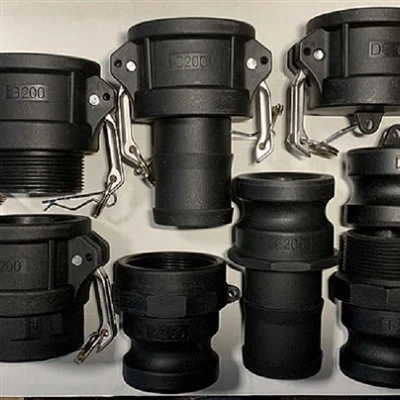
Camlock Coupling Reference:
ISO 12103-1, Road vehicles — Test dust for filter evaluation — Part 1: Arizona test dust, International Organization for Standardization, 2016.
IP Code 6X, International Electrotechnical Commission, Degrees of protection provided by enclosures (IP Code), IEC 60529, 2021.
Suzhou Fuyikang Metal Industrial Co., Ltd.
As one of the most professional custom hardware manufacturers and suppliers in China, we have world-leading production equipment and strong manufacturing capabilities. We warmly welcome you to buy bulk high quality custom hardware for sale here from our factory.
Address: No.26.Mudong Rd,Mudu Town, Wuzhong Distric, Suzhou City,Jiangsu Province,China
E-mail: SZFYK@SZFUYIKANG-COUPLING.COM
WebSite: https://www.fyk-coupling.com/
