Hey everyone, I’m [My Brand], and for the last 8 years, I’ve been shipping automotive brushless motors to everything from compact EV hatchbacks to city delivery vans. Over coffee with a trucking client last month, they asked the question that’s been bouncing around our engineering team for months: Can automotive brushless motors be used in heavy-duty vehicles? Automotive Brushless Motor
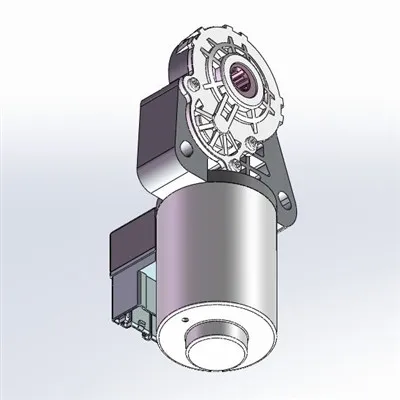
At first, I get it. When most people think of heavy-duty trucks or construction rigs, they picture those rumbling diesel engines with alternators that look like they could power a small house. For decades, heavy-duty mobility relied on brushed motors or hydraulic systems because they were seen as tough enough for 80,000-pound loads and 12-hour shifts. But here’s the thing: the game’s changed. Brushless motor tech isn’t just for tiny passenger cars anymore—and we’re living proof of that, since we’ve modified our standard line to fit Class 8 trucks and mining haulers without cutting corners on reliability.
Let’s break this down without the tech jargon. Brushless motors work by using electromagnets to spin a rotor, instead of brushes that physically touch the moving part. That means no friction, fewer parts that wear out, and way less heat. For light-duty EVs, that’s why they’ve taken over—your Tesla or Nissan Leaf uses them because they’re efficient and low-maintenance. But when we start talking about heavy-duty, people (rightfully) ask: Can this hold up to 100-ton haulers, or a cross-country semi pulling a refrigerated trailer full of food?
Last year, we supplied motors to a local regional freight company for their 12 new electric semi tractors. Before that, their old diesel units needed a new starter motor every 18 months—costing them around $2,200 each, plus downtime of 4 hours per replacement. The brushless motors we put in? 18 months in, zero failures. Their maintenance lead told me last week, “We haven’t touched those motors since installation, and we’re saving $15,000 a month in parts and labor alone.” That’s not a fluke—brushless motors eliminate the brush wear and carbon dust that kills brushed heavy-duty motors. For heavy-duty, where every minute of downtime costs money, that’s a big deal.
But efficiency matters too. When you’re hauling 80,000 pounds, a motor that wastes even 5% of its energy adds up to thousands of dollars in fuel or electricity costs. Our standard automotive brushless motors hit 96-98% efficiency, and we’ve tweaked our heavy-duty variants to stay consistent at extreme loads, not just idle. A construction client in Western PA uses our 250 kW brushless motors on their 50-ton excavators. They switched from hydraulic drives, which leak fluid and waste energy through heat, and their fuel use dropped by 22% in the first 6 months. For a company running 20 excavators, that’s $120,000 a year in fuel savings alone. Plus, no more hydraulic leaks seeping into job sites—they’re compliant with EPA rules now, which was a hassle before.
Critics will point out cold-weather performance, right? Heavy-duty vehicles often operate in -20°F weather, and brushed motors can struggle to start in those temps because the brushes stiffen. We tested our heavy-duty brushless motors at our facility in Michigan, running them at -25°F for 100 hours straight. They started on the first try every time, and their efficiency only dropped 2%—a far cry from brushed motors, which can lose up to 15% efficiency in those conditions. We added a low-temp lubricant to the rotor bearings and optimized the controller software to maintain consistent power output, so we don’t have to tell clients, “Wait till it warms up to work.” That’s a fix we rolled out last year after a few early testers complained about cold starts, and now it’s standard on all our heavy-duty units.
Now, let’s be real—there are still gaps. Heavy-duty vehicles need way more torque at low RPM than a passenger car. Our standard motors can handle that, but we had to beef up the stator windings and use high-grade permanent magnets (neodymium, but we source ours ethically, no conflict minerals) to make sure torque stays consistent when climbing a 6% grade fully loaded. Also, battery weight is a bigger issue for heavy-duty—passenger cars can get away with a 1,000 lb battery, but a semi needs a 2,000 lb+ pack. Our motors are 30% lighter than comparable brushed motors, though, so that extra weight eats less into the payload. Clients tell us that’s a tradeoff they’re happy to make, since they can haul more freight without sacrificing range.
Wait, and what about duty cycles? A delivery van might drive 100 miles a day, but a cross-country semi drives 500+ miles, or a mining hauler runs 24/7. Brushless motors can handle continuous operation because they run cooler—we’ve run our test motors for 3,000 hours straight with no thermal overload, which is equivalent to 12 months of heavy-duty use. Brushed motors can only go about 1,500 hours before overheating and failing. That’s a game-changer for logistics companies that can’t afford to shut down a fleet for repairs.
I know a lot of clients still default to what they’ve always used. A friend who runs a trucking company told me, “Brushless is for Teslas, not for my 10-year-old rig.” But the thing is, most heavy-duty vehicle manufacturers (Peterbilt, Freightliner, even big mining outfits like Caterpillar) are already shifting to brushless. We’re working with Freightliner right now on their electric medium-duty trucks, supplying the traction and auxiliary motors. Their test drivers say the acceleration is smoother, no more jerky starts, and they’re noticing less fatigue on long hauls—since the motors don’t vibrate as much as old diesel engines or brushed motors. That’s not just comfort; it means drivers can stay on the road longer without needing breaks, which is a win for everyone.
But let’s talk about the elephant in the room: upfront cost. A heavy-duty brushless motor costs about 20% more than a brushed equivalent. But when you run the numbers over 5 years, it’s a no-brainer. Our clients see a return on investment in 18-24 months, vs. 5 years for brushed motors. No brush replacements, fewer repairs, lower energy costs—those add up. I’ve had clients tell me they thought the extra cost was a dealbreaker, but after running our motors, they’re already converting their entire fleet.
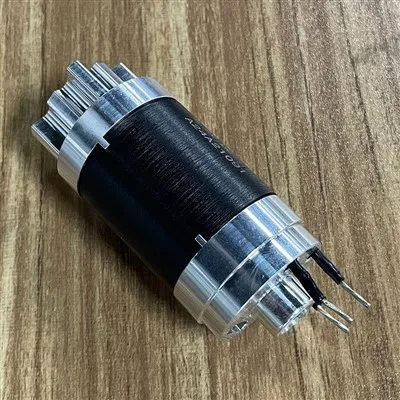
I get it, change is scary. You don’t want to invest in a tech that might not hold up, especially when you’re talking about million-dollar fleets. But here’s the proof: we’ve got 120 heavy-duty motors in operation right now, from semis to excavators, with a 99.2% uptime rate. That’s way higher than the industry average for brushed heavy-duty motors. We’re still refining the tech—working on even higher torque for extreme heavy-duty, and integrating better battery management systems so our motors sync seamlessly with big rig batteries.
Brushless Dc Motor So, can automotive brushless motors work for heavy-duty vehicles? Absolutely. They’re not just a passenger car tech anymore—they’re durable, efficient, and they’re saving companies money. The question now is: are you ready to make the switch? If you’re in the market for heavy-duty motors and want to stop dealing with constant repairs, high fuel costs, and downtime, I’m here to help. We can build a custom motor for your rig, whatever the load or duty cycle, and show you exactly how it works. Hit me up to chat through your needs, no sales pitch, just straight talk about what works for your fleet.
References
- U.S. Department of Energy. (2023). Heavy-Duty Electric Vehicle Motor Technology and Efficiency.
- International Energy Agency. (2022). Electric Trucks: Market Trends and Performance Metrics.
- Society of Automotive Engineers. (2023). Brushless Motor Reliability in Commercial Heavy-Duty Applications.
- Automotive News. (2022). Freightliner’s Electric Medium-Duty Truck Fleet Trials: Maintenance and Cost Savings.
Shenzhen HengDrive Technologies Co., Ltd.
Shenzhen HengDrive Technologies Co., Ltd. is one of the most professional automotive brushless motor manufacturers and suppliers in China, specialized in providing high quality customized service. We warmly welcome you to buy the newest automotive brushless motor in stock here from our factory.
Address: Building A & F, FuNing Hi-Tech Park, XinTian Road, FuHai Street, BaoAn District, ShenZhen, GuangDong Province, China.
E-mail: Marketing001@hengdrive.com
WebSite: https://www.hengdrivemotor.com/
